.png?width=12000&height=2033&name=WeberKnappLogo_white%20(1).png "WeberKnappLogo_white (1)")

Custom heavy-duty hinges often work behind the scenes, but they support some of the most demanding applications across modern industry.
When movement needs to feel controlled and predictable, hinge performance becomes part of the overall experience of using a product or system.
Design decisions around motion and load can influence how safe something feels to operate and how well it holds up over time. That’s why custom heavy-duty hinges are developed with the full application in mind, rather than treated as an afterthought.
Below are several industry examples that show how custom hinge solutions are used to solve practical design challenges in real working environments.
7 Industries That Use Heavy-Duty Hinges
Heavy-duty hinges can be found in nearly every industry, from the manufacturing floor to restaurants, to even the battlefield. Custom heavy-duty hinges and their features are specific to the job and benefits can change dramatically throughout each industry. There are seven industries in particular where custom heavy-duty hinges thrive:
- Manufacturing
- Food and Beverage
- Medical Equipment
- Industrial
- Farming
- Military Equipment
- Hospitality
Let’s dive into the seven industries:
1. Manufacturing
Concealed hinges are important in the production of commercial refrigerators or in security doors, which need to be less visible. These hinges are hidden when the door is closed, preventing any interference with design or the potential to draw unwanted attention to a secure entrance. The concealed hinge design is a selling point for many customers.
Many other products rely on custom heavy-duty hinges to provide reliable performance. Some cryogenic freezers, for example, require pivot hinges with some adjustments to handle the door’s weight.
2. Food and Beverage:
Food prep areas and kitchens (both indoor and outdoor) have specific needs for counters, workspaces and various appliances needed for food storage. These needs translate to various weight requirements and considerations for motion control.
When it comes to BBQ, grill and smoker hinges require different features depending on the desires of the customer. Motion control and counterbalance hinges protect a heavy lid from slamming shut unexpectedly.
Weber Knapp’s Smokin’ Ugly product line uses the company’s proprietary hinge technology. Spring-assisted hinges are provided with the Smokin’ Ugly drum smoker kit, which will ensure the lid will close smoothly after you find the right barrel to become your backyard smoker.

3. Medical Equipment
Medical devices, including centrifuges for example, require hinges that reduce strain while providing precision control of the lid. This makes the counterbalance hinges an ideal solution to avoid problems.
4. Industrial
Heavy machinery with equally heavy doors is common on industrial sites worldwide.
Counterbalance hinges are commonly used in industrial equipment, allowing workers to open and close doors on the equipment with ease, regardless of the weight of the door.

5. Farming
Farm equipment is another example of heavy machinery that requires a door to open without thinking about it. Counterbalance and motion control hinges come in handy to reduce the energy the busy farmer spends on opening doors and improve safety.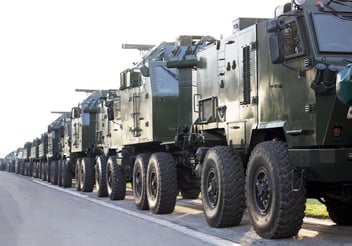
6. Military Equipment
Military vehicles are constructed to withstand enemy fire. The hatch on an armored vehicle must be as solid as the rest of the vehicle.
This is where counterbalance hinges come into play. They balance the lid’s weight against gravity’s downward force allowing for easier egress.
7. Hospitality
Many features in a home or an environment that serves a regular flow of guests require a hinge made to withstand a lot of use. Pivot hinges are a good example of this, as they are usually installed on cabinets or a feature that opens and closes regularly.
Gates in a medical facility also utilize hinges like a gate lift assist, which counterbalances the weight of the gate to prevent it from falling on the individual passing through while allowing it to be moved with little effort.
Integrating Custom Heavy-Duty Hinges and Motion Control Solutions
Working with a custom hinge manufacturer begins with a clear understanding of the application. Motion control solutions and performance requirements shape how a custom heavy-duty hinge needs to function in use.
Defining those parameters early helps engineering teams design hinge solutions that match real operating conditions, rather than forcing a standard approach into a specialized application.
Questions to Consider Before Custom Hinge Design
Before reaching out to a custom hinge manufacturer, it helps to pause and define what the hinge actually needs to do. A short checklist makes those requirements clearer and gives engineering teams a solid starting point for evaluating motion control and design options.
Questions worth thinking through include:
- What will the hinge be used for, and how often will it be operated?
- Where will the hinge be installed, and what kind of environment will it be exposed to?
- Does the hinge need to remain visible, or should it be concealed?
- How much weight does the hinge need to manage?
- What kind of motion is expected during opening and closing?
- How long is the hinge expected to remain in service?
- Are there any safety considerations tied to how the hinge will be used?
Why Custom Heavy-Duty Hinges Start With the Application
Custom heavy-duty hinges are rarely one-size-fits-all. The way a door moves, how much weight it carries, and the conditions it operates in all shape the right solution for the job. When those factors are considered early, hinge design becomes part of the product’s overall functionality rather than a last-minute adjustment.
Working through application details and asking the right questions upfront helps align hinge performance with real-world use. That approach leads to motion control solutions that feel intentional, reliable, and built for how the equipment will actually be used over time.
Have a Specific Application in Mind?
If you’re working through hinge requirements and want a second set of eyes on motion, load, or use conditions, connecting with an engineer can help clarify next steps before design decisions are locked in.
This article was originally published in April 2022 and was recently updated to reflect current industry trends.
