.png?width=12000&height=2033&name=WeberKnappLogo_white%20(1).png "WeberKnappLogo_white (1)")
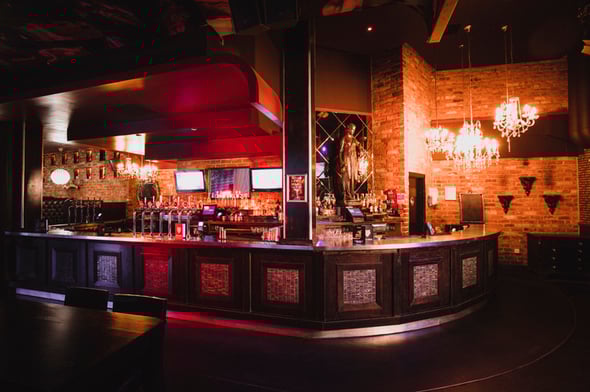
Lift assists for bar and countertop openings are crucial in modern taverns, kitchens, and restaurants. While they add aesthetic appeal, their main value lies in functionality.
However, supporting heavy countertop materials can be risky. It increases strain on supports and mechanisms, which may lead to damage or failure.
Thankfully, counterbalancing technology effectively handles these challenges. Bar countertop hinges are invaluable for designers across various industries.
But how does this motion control technology actually work? Let’s dig into that answer:
What Are Bar Countertop Hinges?
Countertop pass-through hinges make it easier to open moving countertops in:
- Bars
- Restaurants
- Kitchens
These bar flap hinges are designed to offset weight using heavy-duty springs and other mechanisms. The hinge pushes the countertop open using little effort on the user's end, regardless of how heavy it is. For example, stone, granite, and quartz countertops usually require a force of between 85 lbs. and 160 lbs. – yet all can be counterbalanced with the right equipment (and physics).
Medium-to-heavy countertops are safety concerns, as they can degrade the lift mechanism over time and even hurt users who drop the gate. However, your motion control engineer can design a countertop pass-through hinge to handle weight capacities up to hundreds of pounds. The level of support you need will depend on your gate's size and material – counterbalances for granite countertops will have more work to do than one attached to a maple countertop.
4 Pros of Bar Countertop Hinges:
Counterbalance lift hinges have many benefits, including new opportunities for the hospitality industry. By incorporating these hinges, businesses can benefit from these four benefits:
- Safety
- Space
- More Design Options
- Improved Productivity
Safety
Even the best and lightest flip-up countertops lift systems can weigh dozens of pounds, making it potentially too heavy for some users, especially those who are tired or have limited strength.
As a result, someone might accidentally drop the counter top, potentially causing serious injuries to employees and patrons. This could also lead to significant damage to the counter itself.
Fortunately, the right hinge design in a bar lift gate makes even the heaviest countertops feel as light as a feather, reducing the risk of damage and injury.
Interested in learning more about how flip-up bar counter hinges can also work in the hospitality industry? Download our free resource below: 
Space
A traditional pass-through creates a trade-off in your restaurant bar counter design: Staff gains quick access between front- and back-of-house, but loses counter space. It's likely that your staff frequently keeps the gate open, often using makeshift solutions, to reduce the inconvenience. This sacrifices valuable workspace for plating, drink prep, and other services.
But what if your bar flap could easily and safely be closed when not in use? A counterbalance hinge can go up and down with minimal user effort, meaning staff are more likely to close the pass-through when not in use.
This flexibility would allow for more counter space without changing the facility's footprint. This can be especially valuable in high-volume environments where bartenders and servers are bumping into each other in tight quarters.
More Design Options
Restaurant designers often face a form-vs.-function crisis when picking countertop materials: The nicest-looking options are often the heaviest. Natural stone, quartz, thick hardwood surfaces, and other premium materials can create a high-end visual, but their weight may make traditional lift-up countertop sections hard to operate safely.
Counterbalanced countertop technology provides lift assist for bar and countertop openings, making it possible for staff to lift heavier materials. This frees you to use more luxurious options for the look of your restaurant. If you're designing an upscale restaurant, hotel bar, or brewery, it's almost a no-brainer to go for the visual upgrade and heighten the customer experience.
Improved Productivity
Heavy lift-up countertops can be an inconvenience for restaurant and bar servers. They make it difficult to get through the counter, and the seconds spent opening and closing them add up to hours of wasted time over the course of a week.
They may also place strain on exhausted employees, making them less productive and even resulting in extended time off and insurance claims down the road.
A hinged countertop simplifies use by allowing easy access to both sides of the counter, which helps employees save valuable time and effort.
A Wide Range of Applications
Counterbalance lift assistance has applications in virtually anything that involves a counter or cover. Bar flap hinges and kitchen pass-through countertop hinges ease traffic in busy restaurants and create more space.
This technology also has many potential uses as today's establishments further evolve their seating layouts to give guests more space and privacy. (One of the few welcome after-effects of COVID.) More and more members of the hospitality and entertainment industry are building outdoor seating areas; this technology can help save space on seats, tables, and other covers.
Which Hinge Makes Sense for Your Countertop Space?
| Design Type | Rec'd Hinge | Uses/Benefits |
| Standard Flap | Counter flap hinges | Flat, flush surface when open; are excellent for small, lightweight sections |
| Butcher Block/Stone | Gas-spring or torsion mechanisms | Support significant weight (100+ lbs.); soft closing to prevent pinched fingers |
| Continuous Support | Piano hinge with pneumatic shocks | For long spans of wood or uneven distribution of weight |
As you sort through mechanical motion control options for your hospitality space, there are a few questions to keep in mind:
- What material is the countertop made of?
- What are the dimensions (width x depth) and weight?
- Is it a straight flip-up or a pass-through door?
These will help you select an appropriate lift assist hinge. There are a range of options to consider, depending on whether your design is light-duty or heavy-duty.
|
FAQs for Heavy-Duty Lift-Assist HingesQ: What are the installation requirements or challenges for different types of bar countertop hinges? Installation requirements can vary depending on the type and design of the hinge. Common challenges include:
To address these issues, follow the manufacturer's installation guidelines. For more complex installations, consulting with a professional or referring to detailed installation guides can get you across the finish line. Q: How do countertop hinges compare in terms of durability and performance across different manufacturers or brands? Bar countertop hinges can vary significantly in durability and performance. Key factors to consider include:
Higher-quality hinges, often made from materials like stainless steel or brass, tend to offer better performance and longevity. Checking product specifications and customer reviews can help in assessing how well a hinge performs over time and whether it meets specific needs or expectations. Q: Are there specific considerations or restrictions when integrating countertop hinges into custom designs or renovations? You'll need to take several into account. These include:
|
Heavy-Duty Bar Countertop Hinges: A Crucial Asset
Lift assists for bar and countertop openings should always include a heavy-duty hinge. They make using lift-up countertops easy, keep users safe, and boost employee productivity.
Now all you need is a little engineering. To calculate the necessary lid torque to counterbalance your next lift gate design, use the free tool below:

This article was originally published in May 2022 and was recently updated to reflect current industry trends.
