.png?width=12000&height=2033&name=WeberKnappLogo_white%20(1).png "WeberKnappLogo_white (1)")
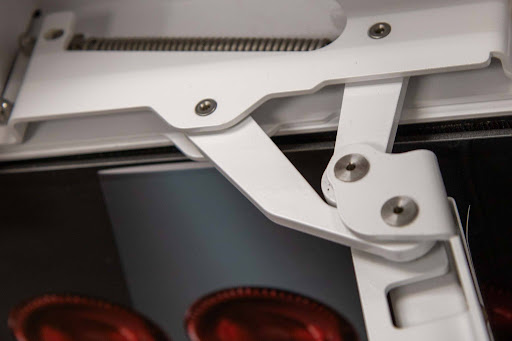
What causes a hidden hinge installation to fail?
It isn't always poor workmanship or the wrong hinge. More often, problems appear because important design considerations were overlooked before the hinge was ever installed. By the time those issues show up during assembly, fixing them can require extra time and added cost.Hidden hinges leave very little room for adjustment once they're integrated into a product. That makes planning just as important as installation. Taking the time to evaluate the application early can help the finished product perform the way it was intended.
Fortunately, many installation problems can be avoided before the hinge is ever mounted.
What Should You Decide Before Installing a Hidden Hinge?
Choosing a hidden hinge starts with understanding the application. Every product has different design requirements, and those requirements influence which hinge is the right fit. Before selecting a hinge, begin with the following design decisions.
Door Weight
The weight of the door has a direct impact on hinge selection. A hinge that's designed for a lighter door may not provide the performance or cycle life your application requires.
When calculating door weight, include every component attached to the door, such as:
- Decorative panels
- Insulation
- Glass
- Handles
- Other mounted hardware
- Door shelves and shelf loads
Required Opening Angle
Consider how the door will be used once the product is in service. Think about what needs to happen after the door is opened. If users only need quick access, a smaller opening angle may be enough. If larger components, like drawers, must pass through the opening, the hinge may need to allow a greater range of motion. Also consider the door handle size and possible wall proximity when choosing an opening angle.
Defining the opening angle early helps narrow your hinge options and reduces the chance of unexpected interference later in the design process.
Available Clearance
A hidden hinge may be concealed when the door is closed, but it still needs room to move. The available space inside the enclosure should accommodate the hinge throughout its full range of motion.
Before finalizing the design, look for components that could interfere with hinge movement, including:
- Wiring
- Mounting brackets
- Seals
- Nearby hardware
Frequency of Use
Think about how often the door will be opened and closed throughout the product's life. A service panel that's accessed once a month places different demands on a hinge than a door that's used throughout every shift.
Matching the hinge to the expected cycle life can help reduce wear over time.
Where Should a Hidden Hinge Be Placed?
Once you've selected a hidden hinge, the next step is deciding where it belongs. Placement affects how the door moves and how well it stays aligned over time.
Every application is different, so there's no standard mounting location. The best position depends on the design of the product and how the door is expected to function.
As you evaluate hinge placement, ask questions such as:
- Is the door fully supported throughout its range of motion?
- Will the hinge interfere with nearby components as the door opens?
- Is another hinge needed to better support the door?
- Does the hinge location provide the movement the application requires?
Larger or heavier doors often benefit from additional hinges because the load is shared across multiple mounting points. This helps reduce stress on each hinge and improves overall stability.
Why Do Hidden Hinge Installations Fail?
Hidden hinge problems don't always point to a defective hinge. In many cases, the cause is a design or installation detail that wasn't caught until the door was put into use.
Signs that something may be wrong include:
- Binding during opening or closing
- Uneven gaps around the door
- Door sag
- Premature hinge wear
If one of these issues appears, review the application before replacing the hinge. Ask yourself:
- Is the hinge supporting the intended load?
- Is it mounted in the correct location?
- Is anything interfering with the hinge's path of motion?
In many cases, a small adjustment to the design or installation is enough to correct the problem.
What Should You Check Before the Design Is Final?
Before moving into production, give the hinge and surrounding assembly one final review. A few minutes spent verifying the design can help catch issues before manufacturing begins.
Final Design Checklist
☐ Full range of motion: Open and close the door through its entire travel. The hinge should move smoothly without binding or unexpected resistance.
☐ Consistent reveals: Look at the gaps around the door in both the open and closed positions. Uniform reveals help create a cleaner appearance and can indicate that the hinge is operating as intended.
☐ Component clearance: Confirm that the hinge clears nearby brackets, wiring, seals, and other components throughout its travel.
☐ Repeatable operation: Cycle the door several times. The door should operate the same way from one cycle to the next.
When Should You Talk to a Hinge Manufacturer?
Every design reaches a point where trial and error becomes less productive. If a standard hidden hinge still isn't meeting the needs of the application, continuing to revise the product can cost more time than it's worth.
A hinge manufacturer can help identify the source of the problem before more time is spent revising the design. Sometimes the answer is a different hinge. Other times, the application calls for a custom solution.
Good Hidden Hinge Installations Start With Good Design
Installing the hinge is the final step. The groundwork happens during the design process. Every decision leading up to installation influences how the finished product operates once it's in use.
Addressing potential issues before production begins is much easier than correcting them later. When questions come up during the design process, getting input early can help keep the project moving forward.
Not Sure Which Hidden Hinge Is Right for Your Application?
Every application presents different design challenges. If you have questions about hinge selection or product integration, our engineers are here to help.